
The Invisible Signals: What Maja Chwalińska’s Return Reveals About Stress in Elite Sport
Hyvia Team
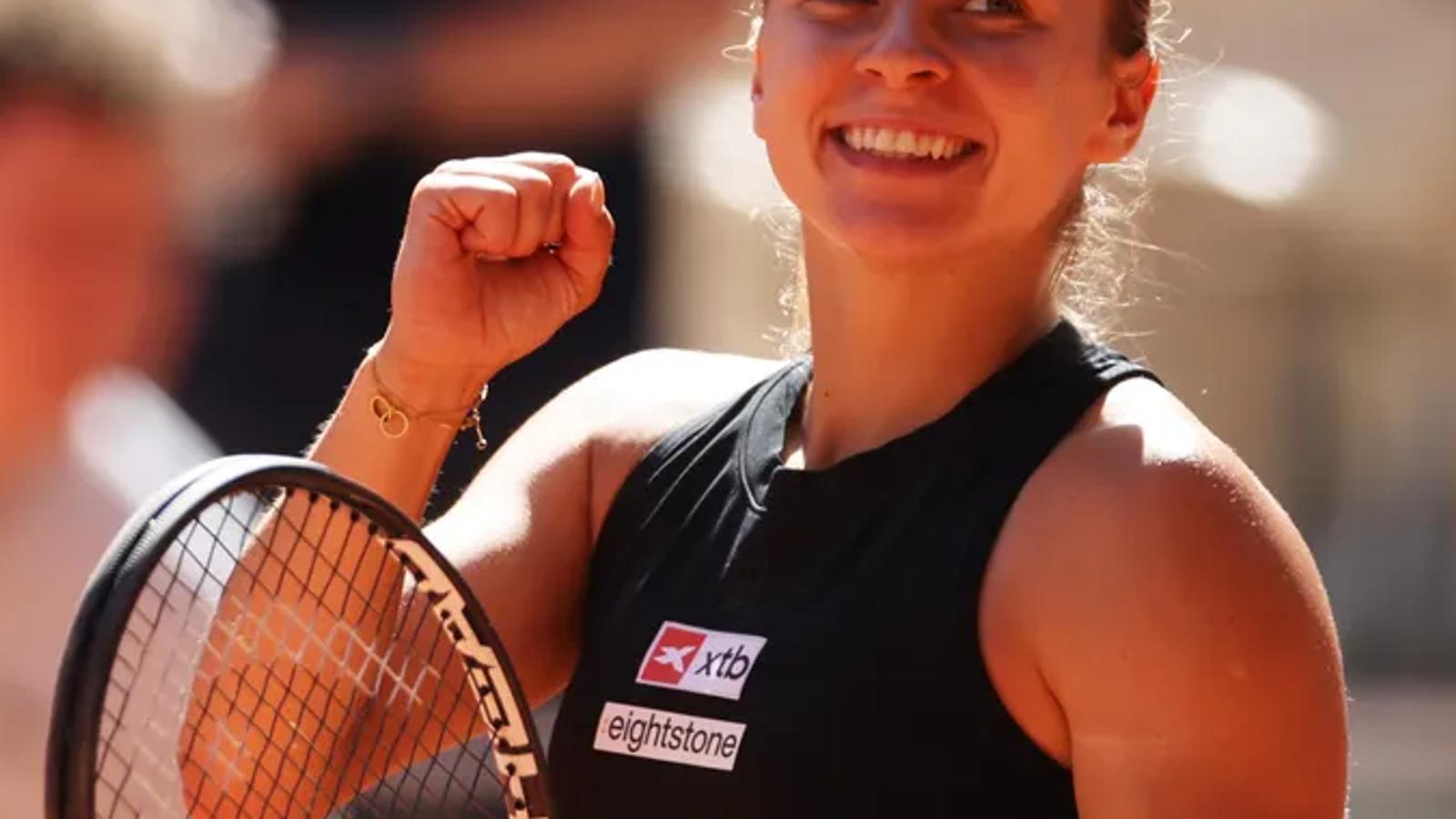
In 2019, Maja Chwalińska was one of Polish tennis’s brightest prospects — a junior standout who had risen through the ranks alongside Iga Świątek. Then the sport she loved began to feel like something else entirely. “Something I enjoyed the most suddenly became a source of suffering,” she later said. “I associated tennis with pressure, stress and crying.”
By 2021, a week after a first-round loss in Wimbledon qualifying, the 19-year-old stepped away from tennis indefinitely. “I have reached the point where I am no longer able to bring myself to train,” she said. What followed, she has spoken about openly: months when it was hard to even leave the house, when the desire for anything had drained away.
The load you can’t see
Her comeback — home to her parents, work with a specialist, boxing instead of tennis, and eventually a return that carried her to her first Grand Slam main draw — is a story about resilience. But it’s also a story about how invisible the hardest part was, right up until it became impossible to ignore.
Elite sport is very good at measuring what an athlete does. Distance covered. Sprints. Minutes played. Loads are logged, sessions are graded, performance is tracked to the decimal. What it measures far less well is what all of that costs — the strain that accumulates, the stress that carries over from the court into the rest of life, the recovery that quietly stops keeping up.
The body keeps a record
That internal load isn’t invisible to the body. Chronic stress and incomplete recovery leave physiological traces — in heart rate and heart-rate variability, in sleep, and in the chemistry of sweat. These signals shift gradually, often long before they surface as flat performance or a decision to walk away. The problem was never that the signals don’t exist. It’s that no one was watching them, continuously, for every athlete.
Making the invisible visible
That’s the gap Hyvia was built to close. The Hyvia band and sweat patch read vitals and sweat-based markers — including cortisol and lactate — continuously, on the pitch and off it. Instead of a snapshot on a single morning, staff get a moving picture of how stress and recovery are trending for each athlete, read against that person’s own baseline.
Sweat chemistry is the part almost no team has ever had. Markers like cortisol and lactate give an objective read on strain and recovery that training logs and mood check-ins can’t provide on their own — and Hyvia is the first platform to bring them into continuous, everyday team monitoring, alongside vitals.
A signal, not a diagnosis
It’s worth being clear about what this is and isn’t. Hyvia is fitness-grade monitoring, built to support the people responsible for an athlete’s wellbeing — not to diagnose anything, and not to replace medical or psychological care. What it offers is earlier visibility: a way to notice when an athlete’s stress is climbing and recovery is slipping, so a coach or performance lead can ask the right question, ease the load, or bring in the right support sooner rather than later.
For a coach, that changes the timeline. Instead of learning that something was wrong after form collapses — or after an athlete steps away — the signals are there to be seen while there’s still time to act on them.
Seeing it sooner
Maja Chwalińska’s return is a reminder that athletes can come back from the hardest places. It’s also a reminder of how much can build up unseen before anyone knows to look. The goal isn’t to reduce a person to a set of readings — it’s to give the people around them a clearer, earlier, more honest picture of how they’re really doing, so no one has to reach breaking point before the signs are taken seriously.
That’s what continuous, objective monitoring makes possible: knowing your players before the game does.